What is a digital twin? The definition, how it works and real examples

A digital twin is a virtual copy of a real thing, such as a pump, a shop, a building or a whole city, that live data keeps in step with the real one. You use the copy to see what is happening now, test a change and plan, before you touch the real thing.
The idea has been in mainstream use for years. In a February 2019 survey of 599 organisations implementing the Internet of Things, Gartner found 13 percent already used digital twins and another 62 percent were setting them up or planned to within a year.
I build the 3D side of them. For the FIFA World Cup in Qatar, Expo 2020 and SEVEN, I turned engineering models into live Unreal and Unity environments. What one costs is in how much a digital twin costs. This page covers what one is.
What is a digital twin?
The Digital Twin Consortium defines it as “an integrated data-driven virtual representation of real-world entities and processes, with synchronized interaction at a specified frequency and fidelity.”
In plain words, a twin has three parts:
- The copy. A model of the thing: its shape, its parts and how they connect.
- The real thing. A machine, a room, a crowd, a road network.
- The link. Data that keeps the copy in step with the real thing. “Frequency” is how often it updates: every second for a queue, once a day for a lease plan. “Fidelity” is how much detail it carries.
Take the link away and you have a model. That is the whole test.
The Consortium also names a stage before that: a digital twin prototype, which models and simulates the future before it is linked to the real thing. A building modelled before it is built is one.
What is the difference between a digital twin, a 3D model and a simulation?
- A 3D model copies the shape. It is frozen: when the real pump stops, the model does not know.
- A simulation is maths that predicts what would happen, usually from assumptions typed in by hand.
- A digital twin is a model plus the live link. When it also runs a simulation on the live readings, it becomes a twin that predicts.
Pick a pump, a shop or a stadium gate below and step through the four levels. Only the last two are twins.
Same thing, four ways. Pick a pump, a shop or a stadium gate, then step from a drawing to a 3D model, to a live twin, to a twin that answers a what-if. Only the last two are digital twins.
With JavaScript off: the same pump, shop and stadium gate are shown four ways, as a drawing, a 3D model, a live twin with sensor readings, and a twin that runs a what-if. Only the live and simulation levels count as digital twins, because only they stay in step with the real thing.
One pump, four ways.
What this level needs
Live
The pump, shop and gate are samples and their readings are made up. The what-if maths is real: the pump affinity laws from the US Department of Energy, the standard Erlang C queueing formula, and the Green Guide's limit of 660 people an hour per turnstile.
How does digital twin technology work?
Every twin I have seen is built from the same four layers. You add them in this order, and many projects stop after the first one.
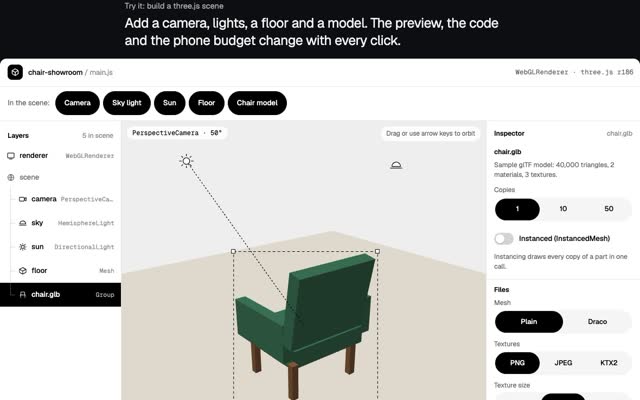
- Model. The shape, from CAD drawings, BIM files or a laser scan. For people to walk through it, it goes into a real-time engine: Unity, Unreal or WebGL in the browser. On SEVEN Al Hamra I started from the Revit, IFC and Navisworks construction models, the same files the builders used.
- Sensors and data. Readings from the real thing: flow and vibration on a pump, door counts and till data in a shop, ticket scans at a gate, energy meters in a building. Most of it already exists somewhere; the work is getting it out.
- Platform. Software that holds the model and the data and keeps them in step. Azure Digital Twins, AWS IoT TwinMaker and Autodesk Tandem are the common ones; I compare their prices in digital twin cost.
- Simulation. The maths that turns readings into a forecast. The interactive uses three real ones: the pump affinity laws, where power follows the cube of speed, so slowing a pump by 20% cuts its power by about half (US Department of Energy); the Erlang C queueing formula for tills; and the Green Guide’s 660 people an hour per turnstile for stadium gates.
Under the hood, the platform stores each real thing as a typed record. This is a pump in DTDL, the modelling language Azure Digital Twins uses: telemetry is what the sensors send, a property is a setting you can change, a relationship links it to other twins.
{
  "@context": "dtmi:dtdl:context;3",
  "@id": "dtmi:com:example:Pump;1",
  "@type": "Interface",
  "displayName": "Pump",
  "contents": [
    { "@type": "Telemetry", "name": "flow", "schema": "double" },
    { "@type": "Telemetry", "name": "vibration", "schema": "double" },
    { "@type": "Property", "name": "speedPercent", "schema": "double", "writable": true },
    { "@type": "Relationship", "name": "feeds", "target": "dtmi:com:example:Tank;1" }
  ]
}
What are some digital twin examples?
Buildings
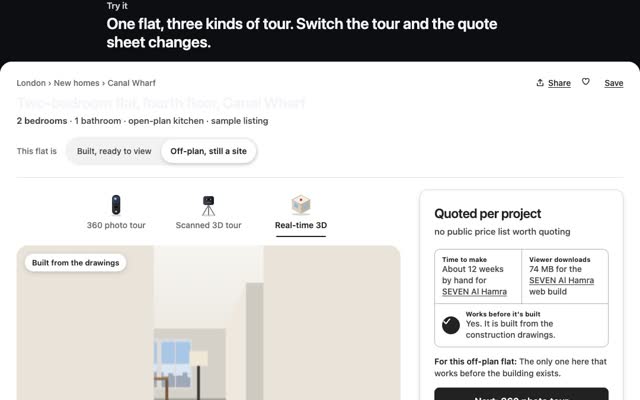
I turned SEVEN’s construction models for Al Hamra in Riyadh into a building you can walk through in a browser, before it was built. It took just under 12 weeks from first access to sign-off, by hand. By the Consortium’s definition it is a digital twin prototype: the copy came first, so people could explore floors and units of a venue that did not exist yet.
Factories
BMW Group says its Debrecen plant in Hungary is its first plant planned and validated completely virtually (March 2023), with vehicle production running in the twin more than two years before series production. Gartner’s survey gives the smaller version: in a power plant, each valve, pump and generator can have its own twin, plus one twin that combines them.
Cities
Helsinki calls its 3D city models the city’s digital twin. Its Energy and Climate Atlas shows energy and renovation information building by building, and its Kalasatama project ran on the rule “design, test and build digitally first.”
Events
OnePlan says its browser-based VenueTwin was used across 49 venues by 46 functional areas to plan the Paris 2024 Games. Temporary venues such as the Eiffel Tower Arena existed only in the twin before they were built.
At Expo 2020 Dubai my team of 12 worked on Virtual Expo Dubai, the whole site in real-time 3D. The Expo closed. The twin is still live. How an event twin earns its keep before, during and after the event is in virtual stores, live shows and 3D worlds.
The same engines also run virtual places where people meet. With Napster, DMCC launched its Crypto Centre metaverse in Dubai: walk into a boardroom where avatars meet, or join the treasure hunt, in a desktop browser. I led a 24-person team at Napster. A world like that becomes a twin only when it is linked to live data from a real place.
Is a 3D virtual tour a digital twin?
No. A 360 tour is photos you click between, and a scan-based 3D tour is a model of how a place looked on the day it was scanned. Both sit at level two or below in the interactive: a copy with no live link. The differences and prices are in how much a 3D virtual tour costs.
How do you start a digital twin?
Start from a decision, not from the technology.
- Write down the one decision the twin should help with. How many lanes to open at 6 pm. Which pump to service first. Whether a lease plan works on floor two.
- Pick the lowest level that answers it. If people only need to see and walk the place, a 3D model is enough and costs far less. SEVEN needed exactly that before opening.
- List what already exists. Drawings, BIM, the building management system, ticketing, till and maintenance data. Every file you have is one nobody models by hand.
- Set the frequency and the fidelity. Every second or once a day; every bolt or just the rooms. This choice drives the cost more than any platform.
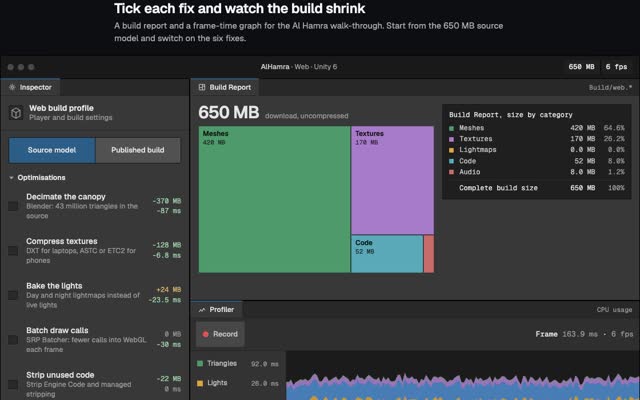
- Choose where people will open it. A control room screen, a laptop browser, a phone. The weakest device sets the budget for the model.
- Twin one asset end to end first. One pump, one shop, one gate, from data to screen, then copy the pattern.
Questions people ask
What is a digital twin in simple terms?
A live copy of something real. It looks like the real thing, it updates when the real thing changes, and you can try changes on the copy first.
What is digital twin software?
Two kinds of software working together: a platform that holds the data and keeps it in step, such as Azure Digital Twins, AWS IoT TwinMaker or Autodesk Tandem, and an engine that shows it in 3D, such as Unity, Unreal or three.js in the browser.
Is a BIM model a digital twin?
Not on its own. BIM is the model layer. It becomes a twin when live data from the finished building is linked to it.
What are digital twins used for?
Planning a building, plant or venue before it exists, watching it while it runs, finding faults before they cause a failure, and testing changes such as layouts, staffing or machine settings on the copy first.
How much does a digital twin cost?
It depends on the levels you need. I break a building twin down line by line, from the 3D model to sensors, platform and simulation, in how much a digital twin costs.
If you have the drawings or the BIM and want a twin people can open from a link, see how I take on 3D web projects or write to m@tawfik.tv.