How much does a 3D virtual tour cost? 360 photo, scanned and real-time 3D compared

A 3D virtual tour costs anywhere from a $549.99 camera plus free software, for a 360 photo tour you shoot yourself, to $319 for a scanned Matterport-style tour of a home, done for you. A real-time 3D walkthrough, the kind people can walk through before the building exists, is a custom build quoted per project.
Buyers want tours more than agents supply them. In the National Association of Realtors’ 2025 Home Buyers and Sellers Generational Trends report, 41% of buyers who searched online rated virtual tours “very useful”. Only 16% of sellers who used an agent said the agent marketed their home with one.
I’m Mo Tawfik Khalifa. I build real-time 3D worlds: my Hermès virtual store, the TAG Heuer showroom I built at Napster, Virtual Expo Dubai with my team of 12, and SEVEN Al Hamra, a building you could walk through before it was built. Here is what each kind of tour costs, takes and is good for. Every price comes from the maker’s own page, checked in October 2026. None of them are my prices.
What is the difference between a 360 virtual tour and a 3D tour?
There are three kinds, and the names get mixed up.
- 360 photo tour. A 360 camera takes one spherical photo per room. Software links the photos, and visitors jump from spot to spot and turn on the spot.
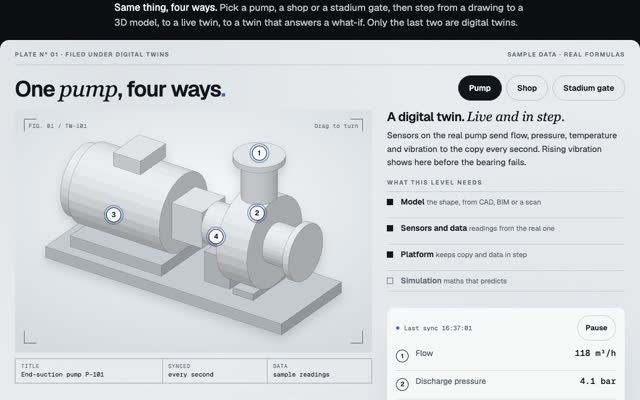
- Scanned 3D tour. A scanning camera, or a phone, captures the rooms. Matterport is the name most people know. Visitors step between scan points, pull back to a dollhouse view, read a floor plan and measure rooms.
- Real-time 3D. The place is drawn live by a game engine, so visitors walk anywhere, like a video game. It can be built from construction drawings, as I did for SEVEN Al Hamra, or scanned from a real place as a Gaussian splat.
So “360 virtual tour vs 3D” comes down to how people move: a 360 tour jumps, a scanned tour steps, real-time 3D walks.
How much does a virtual tour cost?
360 photo tour. You buy the camera once and the rest can be free.
- Camera: the Insta360 X5 lists at $549.99 and the Ricoh Theta X at $599.95.
- Software: Marzipano is free and open source, and its tool exports a web app you can put up as it is. 3DVista Virtual Tour Pro is 499 € once, with hosting from 99 € a year.
Scanned 3D tour. You pay per home, or you pay a subscription and scan it yourself.
- Done for you: HomeJab lists a Matterport-powered 3D tour at $319 for homes up to 4,000 sq ft and $459 at 6,000 to 8,000 sq ft, in most of the US. Matterport’s own capture service delivers in as fast as 24 to 48 hours.
- Yourself: Matterport’s free plan keeps one tour live and works with a phone or a 360 camera. The Professional plan is $108 a month for 10 tours, or $90 a month paid yearly. The Pro3 camera starts at $3,995.
Real-time 3D from drawings. I found no published price list worth quoting, because every building is a different job. The cost is the build. SEVEN Al Hamra took me just under 12 weeks by hand, from first access to the construction models to sign-off. For market ranges on 3D web builds, see what a 3D website costs.
Gaussian splat. Scaniverse scans on iOS and Android and makes the splat on the phone. Spark shows it in a browser and is open source under the MIT licence. You pay in time and a web host.
Switch the flat below between built and off-plan, then flip through the three tours. The quote sheet uses the numbers above.
Try itOne flat, three kinds of tour. Switch the tour and the quote sheet changes.
This demo needs JavaScript. The short version, from each maker's own price page, checked October 2026:
- 360 photo tour: a $549.99 camera, free or 499 € software, jumps between photo spots, needs finished rooms.
- Scanned 3D tour: $319 done for you (Matterport-powered, up to 4,000 sq ft), then $90 to $108 a month to keep 10 tours online. Needs finished rooms.
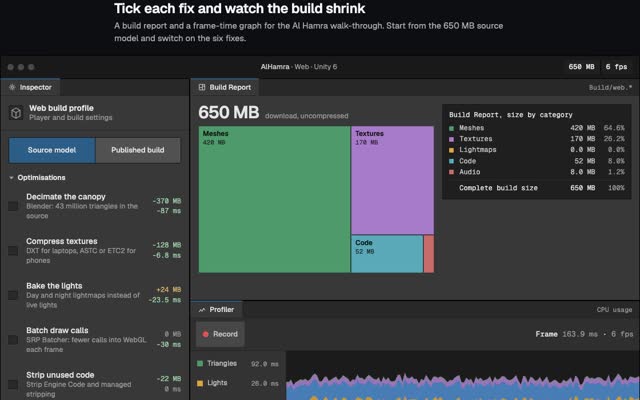
- Real-time 3D from drawings: quoted per project; my SEVEN Al Hamra build took about 12 weeks and is a 74 MB download. Works before the building exists.
- Gaussian splat scan: a phone scan app and an open-source renderer; my window demo's scene is 4.4 MB. Needs a real place.
Two-bedroom flat, fourth floor, Canal Wharf
2 bedrooms · 1 bathroom · open-plan kitchen · sample listing
Which virtual tour is best for real estate?
It depends on one question: does the place exist yet?
- Selling or letting a finished flat. A scanned tour. Buyers get the layout, the floor plan and the measurements, and $319 is a small line on a sale. If the budget is one camera, a 360 photo tour shows every room.
- Pre-selling a building that is not built. Real-time 3D from the drawings, because there is nothing to photograph or scan. SEVEN Al Hamra was still a construction site. I turned its Revit, IFC and Navisworks models into a building people explored floor by floor, by day and by night, and SEVEN signed it off as the first of six destinations for its 3D portal. Walk through it.
- A branded experience. Real-time 3D again, because you control every surface, light and product, and every room can end in an action. That is how I build virtual stores, and why the Expo 2020 twin is still open after the Expo closed.
- One real room with atmosphere. A Gaussian splat keeps the real light and texture of a place in a small file. My window demo runs Spark’s own sample scene, and I explain the method in Gaussian splatting on a website.
How do you make a 3D virtual tour?
- Decide what people must do inside. See every room, measure rooms, or walk a building that does not exist yet. That picks the kind.
- Check what you start from. A finished place can be photographed or scanned. An unbuilt one starts from the construction models: Revit, IFC or Navisworks.
- Capture. One 360 photo per room, or a scan at every step through the space, or the 3D views exported from the building model.
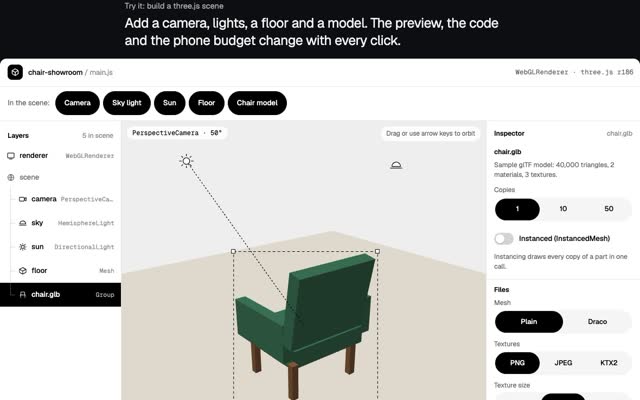
- Build. Link the photos in the tour editor, let Matterport process the scans, or strip, optimise and light the model in a game engine. For SEVEN Al Hamra I left out 758 hidden objects, like cable trays and ducts, that no visitor would ever see.
- Host it. A subscription for scanned tours, or plain files on a web host for the rest.
- Test on the weakest phone your buyers use, on mobile data, before anyone sees it.
- Put it where buyers look: the listing, the portal and the agent’s own site.
What does a virtual tour cost to keep online?
- Scanned tours live on the subscription. Stop paying and archive one, and Matterport says the tour can’t be viewed until you reactivate it.
- 360 tours, splats and WebGL builds are plain files. Any web host serves them, with one download per visitor.
- Streamed real-time 3D renders on a cloud GPU for each viewer, at about $0.53 an hour each on AWS. That is why I build for the browser unless the visuals are worth the bill.
Will a virtual tour work on a phone?
The more freedom a tour gives, the more it weighs.
- 360 photo tour: the Marzipano viewer is 55 KB gzipped, then the photos. The lightest of the three.
- Gaussian splat: the scene in my window demo is 4.4 MB, about 5.5 MB with the renderer. Spark says it renders fast even on low-powered mobile devices.
- Real-time 3D: the SEVEN Al Hamra web build is a 74 MB download, drawing about 700,000 triangles at 60 fps on a laptop graphics chip. On phones it plays a short video first and loads the 3D when you ask.
Questions people ask
How much does a virtual tour cost?
From a $549.99 camera and free software for a 360 photo tour, to $319 for a scanned tour of a home done for you, to a quoted custom build for real-time 3D. Scanned tours also need a subscription to stay online.
Is a 360 tour the same as a 3D tour?
No. A 360 tour is linked photos you jump between. A scanned 3D tour adds depth, so you get a dollhouse, a floor plan and measurements. Real-time 3D lets you walk anywhere.
Do I need a Matterport camera?
No. Matterport’s free plan works with a phone or a 360 camera. The Pro3 camera, from $3,995, is for people who scan for a living.
Can you make a virtual tour of a building that is not built yet?
Yes, as real-time 3D built from the construction models. Photos and scans need finished rooms. SEVEN Al Hamra is one I built while the venue was still a site.
What is the best virtual tour software?
The best one depends on the kind. For 360 tours, Marzipano is free and 3DVista is a one-off licence. For scanned tours, Matterport. For real-time 3D, a game engine such as Unity or Unreal. For splats, a scan app such as Scaniverse and a renderer such as Spark.
If you need a tour or a walkable building made, write to m@tawfik.tv, or see how I take on 3D web projects.