Virtual stores, live shows and 3D worlds people actually use

People stopped calling it the metaverse. Brands never stopped building it.
I’m Mo Tawfik Khalifa. For 20+ years I have built live systems and real-time worlds: for the BBC, Formula 1, the Winter Olympics and Expo 2020 Dubai, and in games including PUBG. Today I build virtual stores, live shows, digital twins and games that open from a link on a laptop, phone, tablet or handheld. Call it a virtual world, a 3D world or the metaverse: clients ask me the same questions. Here are my answers, with the work.
How do you build a 3D virtual store?
A woman on a sofa picks up a tablet. One tap on a red-brick townhouse and she is inside a Hermès store, as an avatar with her own live video above her head. A digital host in a silk scarf walks over. She turns a bag in 3D and moves in close on the leather and the clasp.
That was my own Hermès build, and it is the recipe for a 3D virtual store: rebuild the products in real-time 3D, set them in a world that tells the brand’s story, open it on the screen the customer already holds, and end every room in an action.
At Napster I built a TAG Heuer virtual showroom. A round room under a giant watch movement opens onto a racing garage with a Porsche race car, and onto a golf course by the sea where a virtual try-on puts the sunglasses on your own face, with the product page beside them.
I judge immersive retail by one number: taps through to a product page per visitor. Whatever does not move it gets cut.
- Spend the polygons on the product. CAD files or photogrammetry, rebuilt to a polygon budget with the fine detail baked into normal maps. Nobody zooms in on a wall. They zoom in on the clasp.
- Bake the room. Baked lighting and shared materials keep draw calls and texture memory down, so the tablet spends its effort on the bag.
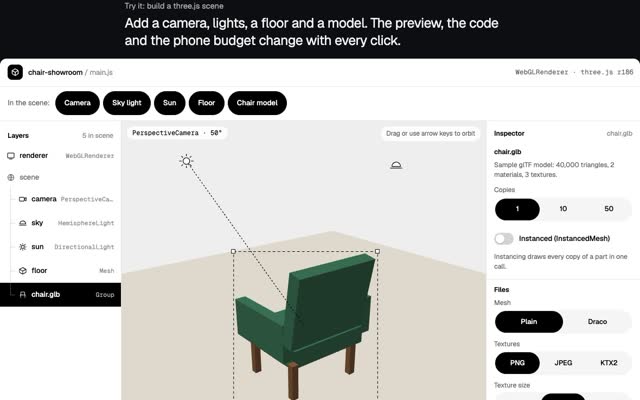
- Load the first room first. Draco-compressed meshes and KTX2 textures stream from a CDN while the customer looks around. Every second on a loading bar is a visitor deciding to leave.
- Build the world, buy the till. The basket stays on the brand’s ecommerce site, one tap away. A 3D product configurator earns its place only when a choice changes the product: strap, dial, colour.
How to create a 3D virtual store, step by step
These are the steps behind my Hermès virtual store and the TAG Heuer showroom I built at Napster, in the order they happen.
- Pick the one number. For a store, mine is taps through to a product page per visitor. Every later step gets checked against it.
- Start from the screen the customer holds. The Hermès store opens on a tablet on the sofa. Name the weakest device your customers use and give it a budget for frame rate, draw calls and texture memory.
- Get the real product files. CAD files or photogrammetry, rebuilt to a polygon budget, with the fine detail baked into normal maps. The leather and the clasp of the bag get the polygons. The walls do not.
- Build a world that tells the brand’s story. A red-brick townhouse for Hermès. For TAG Heuer, a round room under a giant watch movement that opens onto a racing garage with a Porsche race car and onto a golf course by the sea.
- Bake the rooms and load the first one first. Baked lighting, shared materials, Draco meshes and KTX2 textures streamed from a CDN, so the first room opens while the rest loads.
- Add people where they help sell. In the Hermès store, visitors are avatars with their own live video above their heads, and a digital host walks over to help.
- Add try-on where the product sits on the body. In the TAG Heuer showroom, the sunglasses go on your own face through the camera.
- End every room in an action. The product page sits beside the try-on, and the basket stays on the brand’s own shop, one tap away.
- Test on every device, open the doors, and watch the number. Whatever does not move taps to a product page gets cut.
How is a virtual concert made?
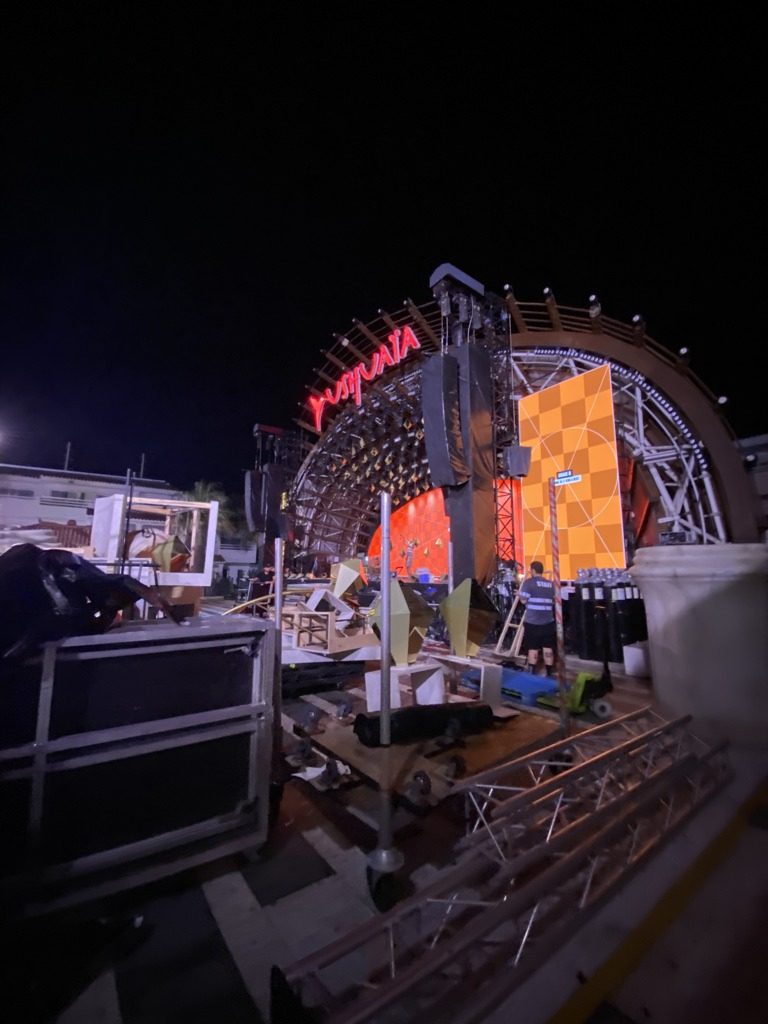
Romain Pissenem asked me to come and meet him at his office in Ushuaïa Ibiza. Romain directs High Scream, the show design studio behind the Ushuaïa and Hï Ibiza stages and David Guetta’s shows. High Scream designed PRISM, the virtual club world inside Sensorium Galaxy. Romain brought me in to run the technical production and workflow of PRISM: the builds, the team, the shows and the tech.
On the Ushuaïa main stage, the LED walls showed test grids, each zone named: DJ BOOTH, DJ BACK 2, L TOP, R TOP.
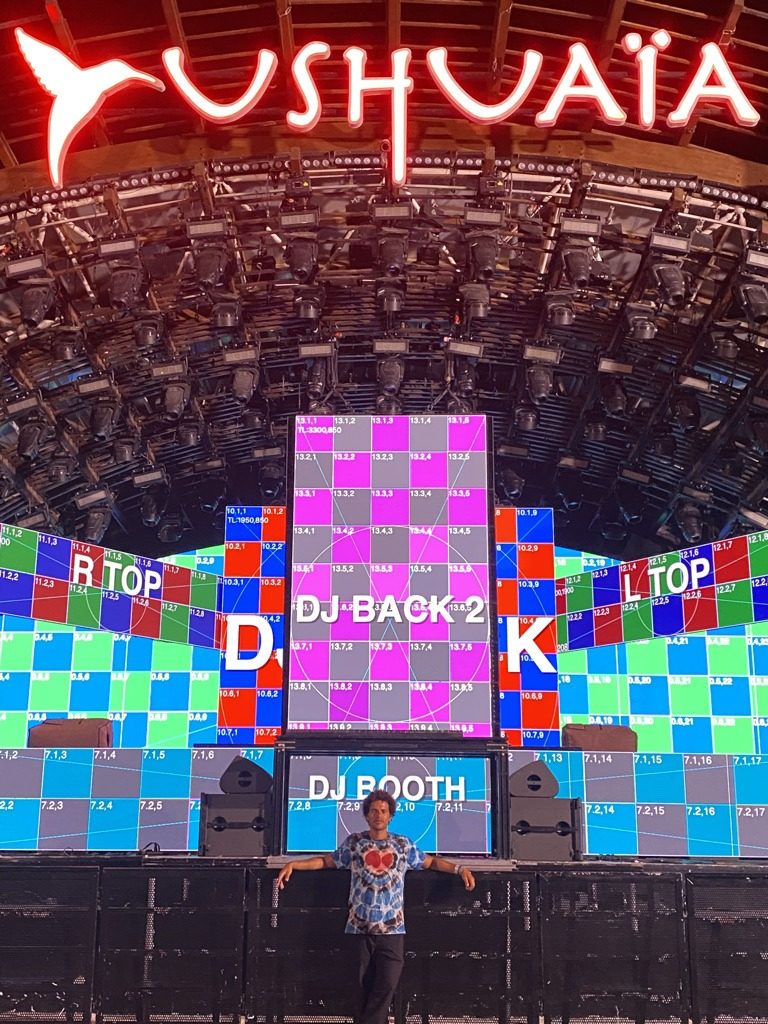
Those grids are the answer. A real stage is mapped panel by panel, so every cue lands where the designer meant it. A virtual concert, or metaverse concert if you still use the word, needs the same map, cue list and rehearsals. Only the stage is built in Unreal Engine instead of steel. Unreal reads DMX, the signal a real lighting desk sends, so the lighting designer programmes the virtual show from the desk they already use.
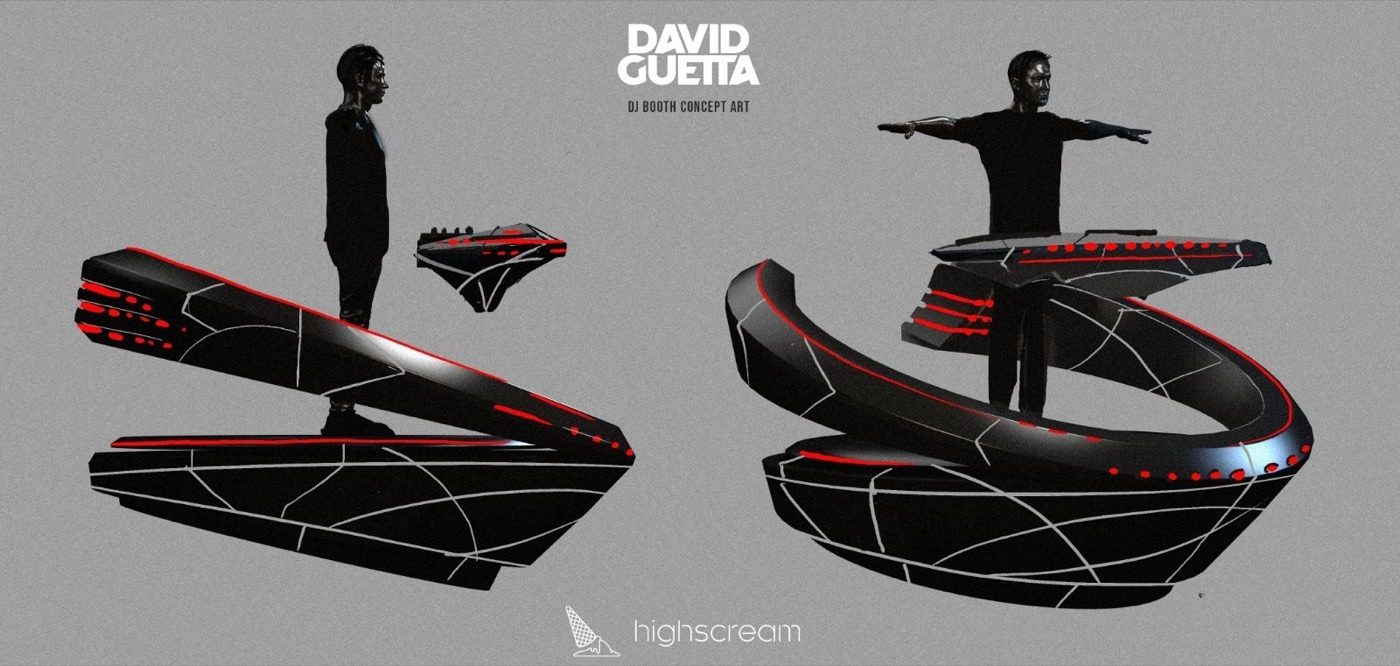
With High Scream, I made the DJ booth concept for David Guetta’s show in PRISM.
Running a virtual show means running 4 things at once:
- Builds. Club, booth and effects in Unreal Engine, with a build for each device.
- Team. One plan for design, engineering and show people, one name on each part.
- Shows. Lights and visuals on timecode, rehearsed like a real show.
- Tech. A budget per device for frame rate, draw calls and texture memory. Dropped frames in a headset make people feel sick, so the headset budget wins every argument.
How a virtual show gets made
Seven steps from a drawing to a live show people watch in VR, on their phones and on YouTube. Tap or click a step to open it.
Design and captureHigh Scream, artist
Run by me: builds, team, shows, tech
Step 01 of 07 · High Scream
Draw the world and the stage
- What happens
- Designers draw the club, the stage and the look of the show, the same way they design a real festival stage.
- Who does it
- High Scream, the show design studio behind PRISM.
- What breaks
- A design can look great on paper and still be too heavy to run inside a headset. Every light, screen and surface costs computer power.
- Where my part starts
- Not my step. The design is High Scream’s. My part starts at the handoff: turning the design into a plan the team can build.
Step 02 of 07 · Artist and capture studio
Turn the artist into a 3D double
- What happens
- The artist stands in a ring of cameras that photograph them from every side, and software turns the photos into a 3D copy (photogrammetry). Then they wear a suit with markers, so a computer records how they move and dance (motion capture).
- Who does it
- The artist and their team, Sensorium’s motion capture studio, and 3D artists who clean up the scan.
- What breaks
- Hair, shiny clothes and fast hands confuse the cameras. Artists have little time, so a bad take may not get a second try.
- Where my part starts
- Not my step. The finished 3D double goes into the club build, which is where my part starts.
Step 03 of 07 · Run by me
Build the club in Unreal Engine
- What happens
- Artists build the club in Unreal Engine, the software behind many big video games: the room, the stage, the screens and the crowd. The artist’s 3D double goes on the stage.
- Who does it
- Environment artists, technical artists and Unreal Engine developers.
- What breaks
- Too much detail slows the picture down. In a headset, a slow or juddering picture makes people feel sick.
- My part
- The builds and the team: who builds what, in what order, and checking that each new version of the club runs well in a headset.
Step 04 of 07 · Run by me
Program the show like a real concert
- What happens
- The music is set, lights are timed to the beat, visuals go on the screens, and every moment of the show is lined up on one timeline.
- Who does it
- Lighting and visual designers, with the developers who put their cues into the engine.
- What breaks
- Sound and lights drifting out of time. A light that hits half a beat late is something everyone in the club notices.
- My part
- The workflow between the show designers and the developers, so every cue in the design plays the same way in the engine, every time.
Step 05 of 07 · Run by me
Play it on every device until nothing breaks
- What happens
- The show is played again and again on every device it will run on: VR headsets, phones and computers. Testers hunt for crashes, stutters and anything that looks wrong.
- Who does it
- Testers and developers, on every headset, phone and computer the show will run on.
- What breaks
- A show that runs smoothly on a powerful PC can stutter on a phone or a standalone headset. Each device needs its own settings.
- My part
- The test plan across every device, and the call on which build is ready to go out.
Step 06 of 07 · Run by me
Send it everywhere people watch
- What happens
- The same show is packaged for every place people watch: VR headsets through Steam and PICO, mobile apps, the web, and live streams on YouTube and TikTok.
- Who does it
- Release engineers, plus the app stores and streaming services that carry the show.
- What breaks
- Every app store has its own review and its own rules. If one version misses the date, that audience misses the show.
- My part
- The release plan, so the VR, mobile, web and stream versions are all ready for the same show.
Step 07 of 07 · Run by me
Run it live, with no second take
- What happens
- The show goes live. People from around the world arrive at the same moment, the stream starts, and the team watches every system as it happens.
- Who does it
- The live operations team: server engineers, stream operators and community moderators.
- What breaks
- Thousands of people arriving at once, a stream dropping, a bug nobody saw in testing. A live show has no second take.
- My part
- The show tech on the night: the checklist, the backup plan and the calls when something goes wrong.
Steps based on public reporting on Sensorium Galaxy’s shows and on standard real-time production. PRISM’s world and stages are designed by High Scream.
Carl Cox’s show, Intermundium, premiered in PRISM as a free 30-minute set. His avatar was built with photogrammetry and motion capture, and the show ran in Unreal Engine, in VR on Steam and as 2D streams from YouTube to TikTok Live. Mixmag reported over 1 million viewers in the opening weekend, and the full show on YouTube has since passed 10 million views.
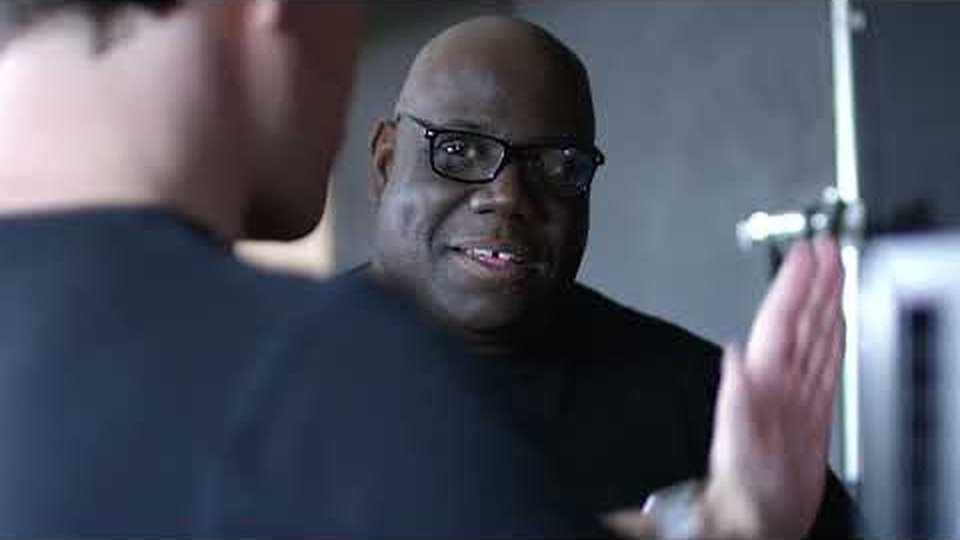
Carl Cox’s show was a successful test. David Guetta’s show is next, date to be confirmed.
How do virtual concerts work?
A virtual concert is a live show played inside a real-time 3D world. The artist is captured and turned into an avatar, the venue is built in a game engine, the show runs from one cue list, and the audience arrives at the same moment from headsets, phones, browsers and video streams. Carl Cox’s show above is a worked example.
To make a virtual concert, you go through 6 steps. In PRISM, the first 2 belonged to the artist’s team and Sensorium’s motion capture studio. I ran the technical production from the build onward.
- Capture. Cameras photograph the artist from every side (photogrammetry), and a marker suit records how they move (motion capture).
- Avatar. 3D artists clean up the scan, rig it to the captured motion and cut it to a budget each device can draw.
- World build. The venue, stage, screens and crowd are built in a game engine, one build per device. PRISM was built in Unreal Engine.
- Show control. Lights, visuals and effects are cued to the music on one timeline. Unreal’s DMX plugin lets the lighting designer run the virtual rig from a real desk.
- Streaming to thousands. The audience is split into rooms of 50 to 100, all locked to one show timeline, with a video stream for everyone else. The next section explains why.
- Chat and interaction. Chat, emotes and nearby voice inside each room, and shared moments fired to every room at once from the show timeline.
Try it. Pick where your audience watches and how many come at once. Then step through the show and see what each choice changes.
The six steps are listed in the text above.
Q1 LIVENext: Avatar
Steps follow PRISM in Sensorium Galaxy and standard real-time production. Room and server figures are worked from Photon’s public pricing and AWS GPU list prices, not from PRISM.
How do you get 1,000 people into one virtual experience?
You don’t put them in one room. With 1,000 avatars in one space, every device draws 999 others and the server sends about 1 million position updates every tick. No phone survives that, which is why a Fortnite match holds 100 players and Travis Scott’s Fortnite concert drew over 12.3 million players at once in copies capped at 50.
So I build one show and many rooms:
- Shard. Rooms of 50 to 100, locked to one show timeline, so every room hits the drop together.
- Cull. Interest management syncs only the people near you. The server (Photon, Nakama or Unreal dedicated servers) holds the truth.
- Instance. Distant avatars share one low-detail mesh, drawn with GPU instancing. Voice only carries nearby.
- Overflow. Past capacity, or on a weak device, you get the live stream.
- Load-test. Bots fill every room before the doors open.
On the night I watch who is still there for the last track. Peak concurrency makes the press release. Retention says the show worked.
Do you need a virtual event platform or a custom build?
If your event is mostly talks on video, a ready-made virtual event platform will do the job. A custom build earns its place when the venue itself is the point: my team of 12 worked on Virtual Expo Dubai, the whole Expo site in real-time 3D, and DMCC’s Crypto Centre, launched with Napster, opens from a link in a desktop browser with nothing to install. Whichever you choose, ask three questions before you sign: does it open from a link on a phone, how does it split a big audience into rooms on one show timeline, and what happens past capacity? My answer for 1,000 people is above: rooms of 50 to 100 locked to one timeline, with a live stream for the overflow.
What is a digital twin of an event?
Months before the gates of Expo 2020 Dubai opened, the master plan model stood next to a tablet running the interactive plan. You could already find your way round pavilions that did not exist yet.
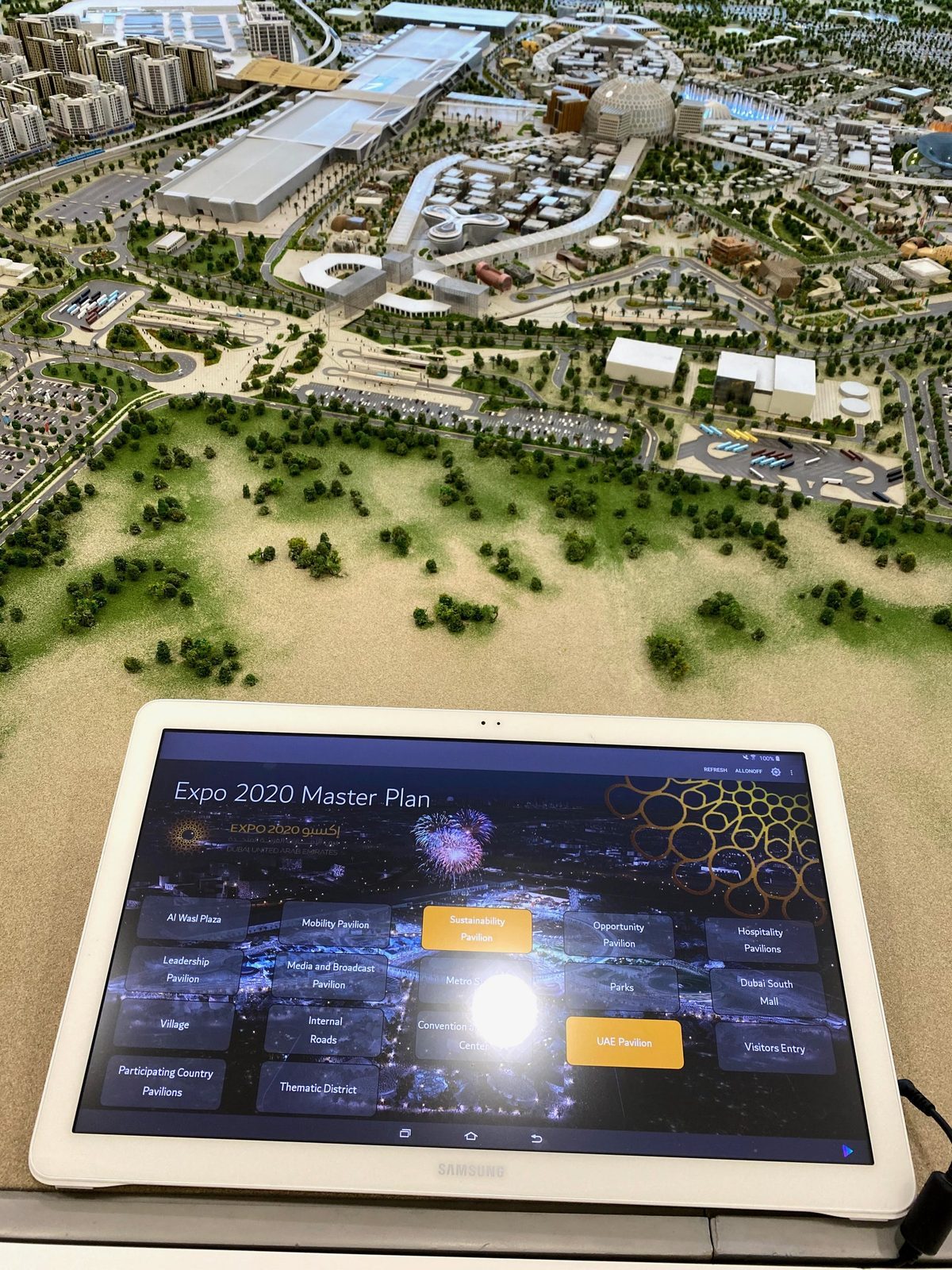
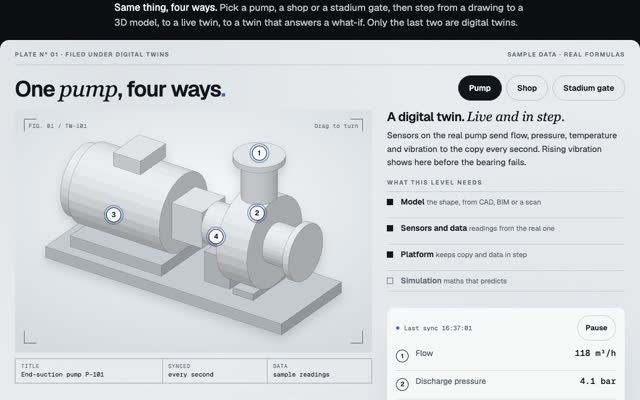
That is a digital twin: a real-time 3D copy of a venue that people can visit before the doors open and after they close. At Expo, my team of 12 worked on Virtual Expo Dubai, the whole Expo site in real-time 3D. The Expo closed. The twin is still live. If you want digital twin examples, start there.
A twin earns its keep 3 times. Before opening, it sells the place to sponsors. During the live event, it lets people who cannot travel walk in. After closing, it keeps the doors open.
Do people need a VR headset?
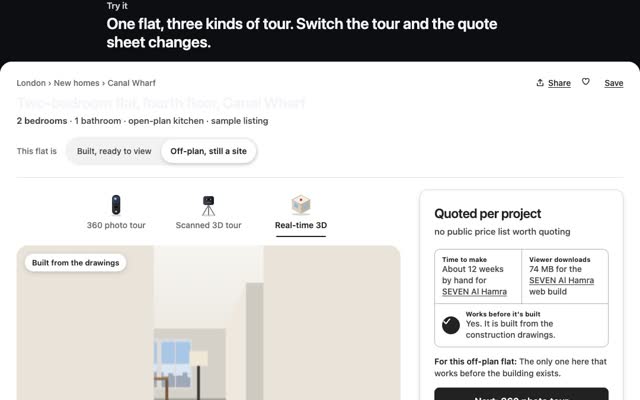
No. Open a laptop, click a link, and you are in the lobby of DMCC’s Crypto Centre, looking out over Dubai. Walk into a boardroom where avatars meet, or join the treasure hunt. Nothing to install: it runs on WebGL in a desktop browser. DMCC launched it with Napster, where I led a 24-person team.
The big audiences point the same way. Carl Cox’s show was built for VR, and its biggest numbers came on YouTube. Bruno Mars drew over 12.8 million players at once to a concert on Roblox. Meta is taking Horizon Worlds almost exclusively to mobile.
Every step up in fidelity costs reach, so I pick the engine by where the audience already is:
- WebGL (three.js): an interactive 3D website that opens from a link on almost any device. Most reach, tightest budget.
- Unity: apps on phones and handhelds, with more headroom.
- Unreal Engine: the best visuals, downloaded or streamed as video through Pixel Streaming, which reaches any phone but rents a cloud GPU for every viewer, about $0.53 an hour each on AWS.
What should you bring if you want one built?
Bring 5 things.
- The goal and its one number. Sales, appointments, minutes inside, people still there at the end. Pick one, and every build decision gets checked against it.
- Who it is for, on which devices. If your customers live on their phones, the phone is the spec.
- The assets you have. CAD and 3D files, packshots, brand guidelines, footage, floor plans. Every real file is one I don’t rebuild by eye.
- The moment it has to work live. A premiere, a store opening, a product drop. I plan back from that minute, the way live TV plans back from air.
- Who signs off. Everyone will have a view. One person owns the yes.
From those 5, I write the brief back to you on one page: the number, the devices, the performance budget for the weakest device, what we build, what we buy (multiplayer, voice, checkout) and what we cut. That page sets the cost and the timeline.
How much does a 3D website or product configurator cost?
On published price lists, a 3D product showcase starts at about $2,000, a product configurator at about $25,000, and a custom 3D store you walk through reaches $200,000 and more. The 3D models of your products usually come on top.
These are market ranges from agency and vendor pricing pages, checked in October 2026. They are not my prices.
- 3D product viewer or tap-through showcase: $2,000 to $5,000, built in 3 to 4 weeks from a template (GlamAR).
- Product configurator with variants: from $25,000 up to $150,000 (Program-Ace). Twikit tells small and mid-size businesses to budget $25,000 to $75,000, and Kolonell quotes 25,000 to 80,000 EUR over 3 to 5 months.
- 3D virtual store or virtual showroom: $5,000 to $25,000 from a template in 4 to 8 weeks (GlamAR), or $50,000 to $200,000+ built custom (Zolak).
- Multiplayer world or live event: $100,000 to $1 million for simulation and sandbox metaverse projects (300Mind, 2023).
- Each 3D product model: $200 to $1,000, or $150 to $500 each from 10 products up (Talo), and $500 to $5,000+ per variant at configurator quality (Twikit).
- AR try-on: $20,000 to $60,000 and 8 to 12 weeks as one feature added to an app (RaftLabs), or from $40 a month as an add-on to a rented configurator (Zakeke).
- Checkout and shop integration: $15,000 to $50,000 for a standard implementation (Twikit).
Three things drive every one of those numbers:
- Asset creation. How many products, and how close people look. A product people zoom into costs more to model than one seen across a room.
- Optimising for phones. Polygon budgets, baked lighting, compressed textures and testing on the weakest device. It has no price of its own in these lists. It sits inside the build line and is a big reason that line is wide.
- Integration. Basket, prices, stock, a CMS your team edits, analytics. Twikit warns hidden costs can add 30 to 50% to a first estimate.
Pick a scope below and the range rebuilds from those sources, line by line.
Try it. Pick what you want built. See the market range, what drives it, and the trade-offs, with a source on every line.
Configure the build
Every choice adds or removes a line on the estimate.
Estimate
Market range, one-off build
- Estimated total
- See the ranges in the text above
Market ranges from published agency and vendor pricing, checked October 2026. They are not my prices: a real quote starts from your products, devices and deadline.
If you want a range for your own products, see how I take on 3D web projects.
So what happened to the metaverse?
Only the word went away. People never stopped shopping from the sofa, dancing in clubs that do not exist or visiting venues before they open. Those worlds now live in browsers, on phones and on handhelds, with the headset as one screen among many. Your audience does not need new hardware. They need a link worth opening.
Live TV taught me to make things work on the night, the first time. A virtual store, a live show and a game ask for exactly that.
Frequently asked questions
Unreal or Unity?
Unreal when visuals come first. Unity for apps on phones and handhelds. WebGL when it has to open from a link.
Can Unreal Engine run in a browser?
Yes, through Pixel Streaming: it renders on a cloud GPU and streams video to the browser. When each viewer controls their own session, each needs their own instance, so cost grows with every viewer. It gets expensive fast: one streaming GPU server on AWS costs about $0.53 an hour, so 1,000 people exploring at once is roughly $526 an hour in GPUs alone, before bandwidth and the spare servers you keep warm for the rush. A WebGL build costs one download per visitor instead, so I only stream when the visuals are worth the bill.
How much does a virtual store or virtual event cost?
It depends on 4 things: how many products are rebuilt in 3D, how real they must look, how many people join at once, and whether it runs live once or stays open. The same 4 set how long it takes.
How much does a 3D website cost?
On published price lists, from about $2,000 for a 3D product showcase built from a template to $200,000 and more for a custom 3D store, before the 3D models of your products. The calculator above shows which choices move the number.
How much does a 3D product configurator cost?
Public ranges run from about $25,000 to $150,000 to build, plus $150 to $5,000 or more for each product model, depending on how close people look. Renting one from a platform such as Zakeke starts at $59 a month for 10 products.
How long does it take to build a 3D virtual store?
Published timelines run from 4 to 8 weeks for a store built from a template to 3 to 5 months for a configurator with pricing and shop integration. Modelling the products runs alongside, at 3 to 10 days per model for one modeller.
How do you make a virtual concert?
Capture the artist, build the avatar and the venue in a game engine, run the show from one cue list, then split the audience into rooms locked to one timeline, with a video stream for everyone else. The 6 steps are above.
Can a virtual concert run in a browser?
Yes. A WebGL build opens from a link on almost any device. Unreal Engine can stream to a browser through Pixel Streaming, at about $0.53 an hour in cloud GPUs for every viewer. Carl Cox’s show reached its biggest audience on YouTube.
Is a digital twin the same as a 3D virtual tour?
No. A virtual tour is photos you click through. A digital twin is a real-time 3D model you can walk through and run live.
Can customers try products on?
Yes. Glasses and sunglasses can be tried on through the camera, as in the TAG Heuer build.
If you want a virtual store, a live experience or a game built, email m@tawfik.tv.