How much does it cost to build an app? Where the money goes, and what AI changes

A focused app with login, payments and an admin screen usually costs tens of thousands of dollars to build, and a bigger one with chat, maps or two native apps runs well into six figures. Most of that money pays for the work after the first version: security, payment edge cases, testing on real phones and getting through the app stores.
The best public number I know comes from Clutch. Across mobile app projects reviewed on its platform, the most common cost is $10,000 to $49,999, the average is $90,780.11 and the typical timeline is about 11 months (figures on the page as updated on 21 September 2026).
I’m Mo Tawfik Khalifa, chief product officer and forward deployed engineer at Instruxi. I built and shipped Laqtaa, a shared wedding photo app, on my own with AI, and I scope app builds for clients. I don’t publish my own prices here. Every dollar below comes from a cited source.
How much does it cost to build an app?
It depends on three things: how much the app does, how many platforms it runs on, and who builds it at what hourly rate. Clutch’s numbers give the market picture:
- Most common project: $10,000 to $49,999.
- Average project: $90,780.11, spread over about 11 months, which Clutch puts at $8,188.44 a month.
- Hourly rates by company location: $25 to $49 in the United States, Spain and Ukraine, $50 to $99 in Canada and Poland, $100 to $149 in Australia.
For comparison with an in-house hire: the U.S. Bureau of Labor Statistics puts the median software developer wage at $135,980 a year in May 2025, before benefits, laptops and management time.
Build your own estimate below. Pick the app type, platforms, features, who builds it and a rate band. You get a cost range, a timeline and the monthly bill. The weeks are my planning assumptions, shown so you can check the sum. The rates and fees are cited market data.
With JavaScript on, this is an estimate builder: pick the app type, platforms, features, who builds it and a rate band, and it shows a cost range, a timeline and monthly running costs. The short answer: Clutch puts the most common mobile app project at $10,000 to $49,999 and the average at $90,780, and an app with login, payments and an admin screen on a small database and hosting plan runs from about $45 a month before transaction fees.
App type 1 of 5
Platforms
Features tap to add0 of 7
Who builds it
Hourly rate band Clutch, by company location
Weeks next to each line are effort assumptions for planning, in person-weeks. Every dollar comes from the rate band you pick.
Build estimate
$0
Grey band: the most common project cost on Clutch, $10,000 to $49,999. Line: Clutch's average, $90,780. Violet: this estimate.
- 01
Cost bands, average cost ($90,780.11), typical timeline (about 11 months) and hourly rates by location: Clutch mobile app cost guide, updated 21 September 2026.
- 02
AI speed on a contained task: developers with an AI assistant finished an HTTP server 55.8% faster, Peng et al., 2023.
- 03
AI on mature code: 16 experienced developers took 19% longer on 246 real tasks, METR, July 2025.
- 04
Store fees: Apple Developer Program, $99 a year; Google Play, $25 once; App Store Small Business Program, 15%.
- 05
Running costs: Supabase pricing, Vercel pricing, Stripe pricing, Google Maps Platform pricing.
- 06
Effort weeks, the AI build discount and team speed-ups are my planning assumptions, shown so you can check the sum. They are not a quote.
Where does the money go when you build an app?
Into nine pieces of work.
- Discovery and design. Who the app is for, the screens, the flows, what is out of scope.
- The backend. The database, the server logic and the APIs every screen talks to.
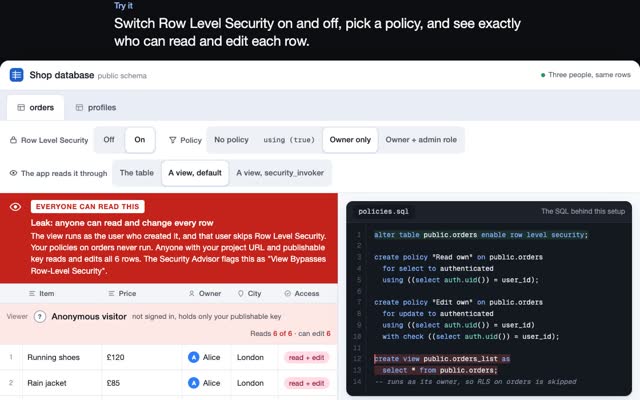
- Login and accounts. Sign-up, password resets, social sign-in, deleting an account, and rules for who can see whose data. Get those rules wrong and one user reads another user’s records. My Supabase security checklist covers the common holes.
- Payments. Checkout is quick. Refunds, failed cards and webhooks that arrive twice take the time.
- An admin screen. Someone on your team will need to look up a customer, fix an order or ban a spammer without a developer.
- QA on real phones. The cheap Android, the old iPhone, a phone call arriving mid-upload, bad signal.
- Store release. Apple’s developer program costs $99 a year, Google Play charges a $25 one-time registration fee, and both stores review your app before it goes live.
- Hosting. The servers and database the app runs on, every month.
- Maintenance. Operating systems update, store rules change and users find bugs. I haven’t found a primary survey that puts a reliable yearly percentage on it, so budget it as monthly hours.
How much does an MVP app cost?
An MVP, a minimum viable product, is the smallest version that proves people want the thing. For most MVPs, that means one platform or a web app, login, one core flow and an admin screen.
On the market numbers above, a focused MVP usually lands in Clutch’s most common band, $10,000 to $49,999. It moves up fast with two native apps, chat, offline mode or anything that touches money. A web app that opens from a link skips the app store fees and review, which is why I start most MVPs in the browser.
Get two or three quotes against the same written scope, or the numbers won’t be comparable. This is the one-page scope I send:
App: one sentence on who it is for and the one job it does
Platforms: web / iPhone / Android (and one codebase or two)
Must have at launch: login, [core flow], admin screen
Not at launch: [list what you are cutting]
Payments: none / one-off / subscriptions / payouts to sellers
Data rules: who can see what, how long you keep it, how users delete it
Testing: which real phones, and who signs off
Release: who owns the Apple and Google developer accounts
After launch: hours per month for fixes and OS updates
Quote as: design / build / hardening and QA / release / monthly running costs
The last line matters most: it shows where each vendor is cheap and what they left out.
How much does it cost to build an app with AI?
Less for the first version, about the same for everything after it.
The evidence goes both ways, and both results match what I see. In a controlled experiment, developers with an AI assistant finished a contained coding task 55.8% faster than developers without one. In a later trial on mature code, 16 experienced developers took 19% longer with AI across 246 real tasks, even though they expected it to make them 24% faster (METR, July 2025).
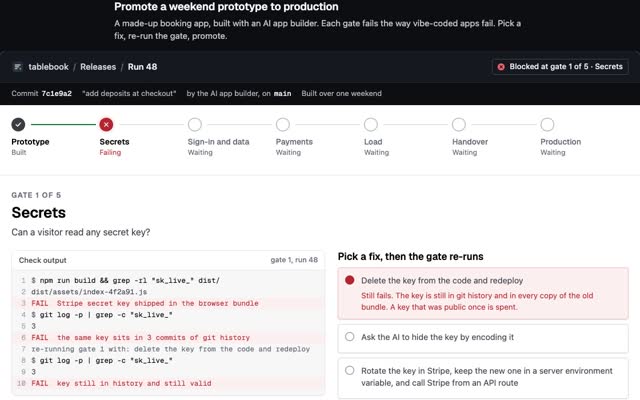
A new app starts as a contained task, and then it turns into mature code. Laqtaa went exactly that way. I wrote a 780-line brief first. On day one, 6 milestones were built and deployed in 53 minutes. A couple of hours later the next commit read “resolve all critical runtime bugs”. Over 5 weeks that became 188 commits, and 93 of them were fixes against 69 features. About 100 wedding guests used it on the day and nothing broke. The full story is here.
So in the estimate builder, “one builder with AI” halves the build weeks, trims design by a quarter and leaves hardening untouched. That split is my assumption, and it is the same pattern I describe in four AI and fintech builds: a prototype takes days, and identity, permissions, limits and an audit trail are the real work. AI makes a cheap first version possible. It doesn’t make the security review, the payment edge cases or the testing on real phones optional.
How much does an app cost to run each month?
For a typical small app, before heavy usage:
- Database, sign-in and file storage: Supabase Pro from $25 a month, including 100,000 monthly active users and 100 GB of files.
- Hosting: Vercel Pro at $20 a month per developer seat.
- Apple Developer Program: $99 a year if you ship on iPhone.
- Card payments: Stripe charges 2.9% + 30¢ per successful US domestic card payment. Digital goods sold inside an iPhone app pay Apple’s commission instead, 15% under the Small Business Program for developers earning up to $1 million a year.
- Maps: Google’s Maps SDK for phone apps is free, and web maps get 10,000 free loads a month, then $7 per 1,000.
- AI features: billed per use by the model provider. Set a monthly cap before launch.
Laqtaa costs me about $46 a month: $20 for Vercel Pro, $25 for Supabase Pro and about $1 for the domain, and those two plans also carry my other projects.
Should you hire an agency, a freelancer or one developer with AI?
Match the choice to what you can manage yourself.
- Agency. A designer, developers, QA and a project manager in one contract. The highest total in the estimate, because project management and QA hours sit on top, and the fastest on the calendar because people work in parallel. Pick it when nobody on your side can run the project.
- Freelancer. One developer, at the same market rates without the overhead. Slower on the calendar, and you become the project manager, the tester and the person who says no.
- One builder with AI. The cheapest first version and the fastest route to something you can tap. The hardening still takes the same weeks, so ask how they will test, secure and release it before you sign.
Whichever you pick, ask for references from apps that are live in the stores, own your Apple and Google developer accounts yourself, and get the source code in your own repository from day one.
Questions people ask
How much does it cost to build an app?
On Clutch, the most common mobile app project costs $10,000 to $49,999 and the average is $90,780, over about 11 months. More features, more platforms and higher hourly rates push it up.
How much does an MVP app cost?
A focused MVP with login, one core flow and an admin screen usually fits Clutch’s most common band, $10,000 to $49,999. A web app avoids app store fees and review.
Is it cheaper to build an app with AI?
The first version, yes: in one controlled study, developers with AI finished a contained coding task 55.8% faster. Hardening costs about the same, and a study on mature code found experienced developers 19% slower with AI.
What are the monthly costs of running an app?
For a small app, about $45 a month for a database plan and hosting, plus $99 a year for Apple, plus payment and usage fees. Budget developer hours for fixes and OS updates on top.
How do I hire an app developer?
Write a one-page scope, get two or three quotes split into design, build, hardening, release and running costs, check live apps they shipped, and keep the developer accounts and source code in your name.
Can you build my app?
Yes. I scope, build and ship apps with AI in the loop, and I can run the product side too, as a fractional CPO. For booking apps with Apple and Google Wallet loyalty cards, see booking and loyalty. If you need this built, write to m@tawfik.tv.